πŸŽ“How I Study AIHISA
πŸ“–Read
πŸ“„PapersπŸ“°Blogs🎬Courses
πŸ’‘Learn
πŸ›€οΈPathsπŸ“šTopicsπŸ’‘Concepts🎴Shorts
🎯Practice
πŸ“Daily Log🎯Prompts🧠Review
SearchSettings
How I Study AI - Learn AI Papers & Lectures the Easy Way

🎬AI Lectures18

πŸ“šAllπŸ“LLM🎯PromptsπŸ”RAG🀝Agents🧠Deep LearningπŸ’¬NLPπŸ€–MLπŸ“–Basics
Difficulty:
AllBeginnerIntermediateAdvanced
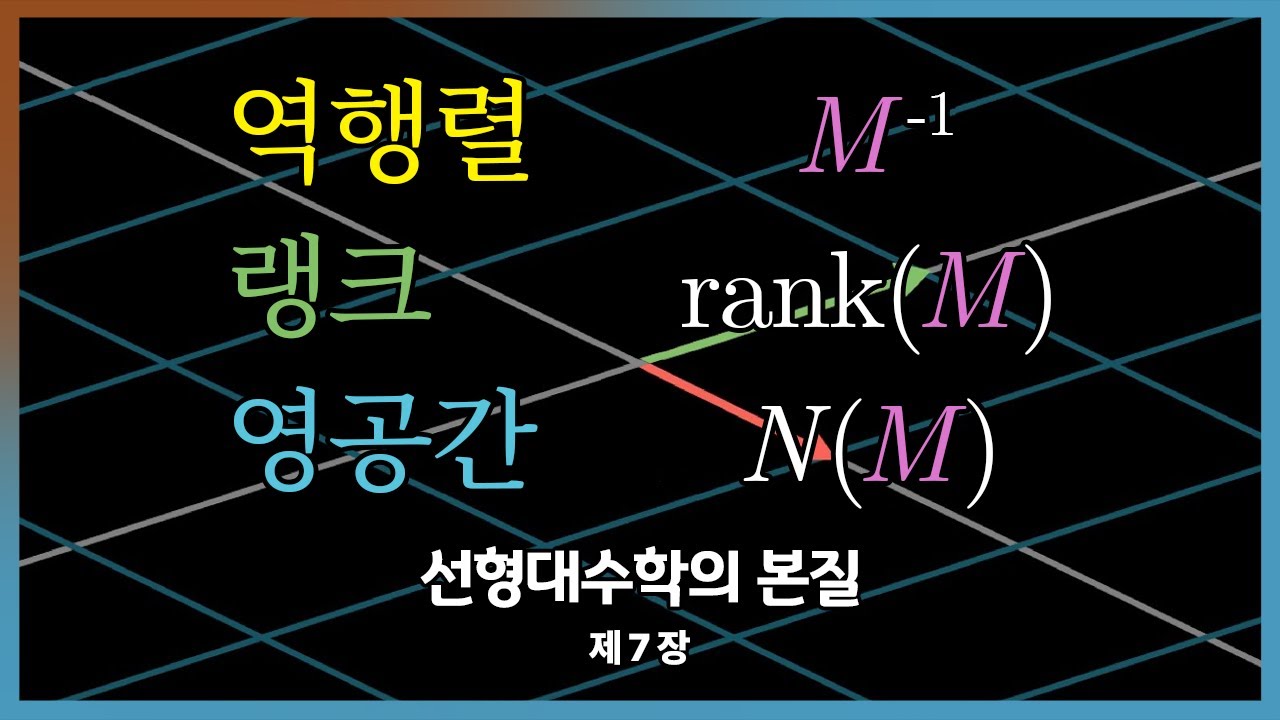
Chapter 7: Inverse matrices, column space, and null space | Essence of Linear AlgebraBasics

Chapter 7: Inverse matrices, column space, and null space | Essence of Linear Algebra

Beginner
3Blue1Brown Korean

Matrices represent linear transformations, which are rules that stretch, rotate, shear, or squash space while keeping straight lines straight and the origin fixed. When you multiply matrices, you are chaining these transformations: first do one change to space, then do the next. Some transformations lose information by collapsing dimensions, like flattening a whole plane onto a line, and those cannot be undone.

#inverse matrix#identity matrix#determinant
12
Why visual understanding of linear algebra matters firstBasics

Why visual understanding of linear algebra matters first

Beginner
3Blue1Brown Korean

This lesson builds an intuitive, picture-first understanding of eigenvalues and eigenvectors. Instead of starting with heavy equations, it treats a matrix as a machine that reshapes the whole 2D plane and then looks for special directions that do not turn. These special directions are eigenvectors, and the stretch or shrink amount along them is the eigenvalue. You will see why some vectors change both length and direction, while a few special ones only change length.

#eigenvalue#eigenvector#linear transformation
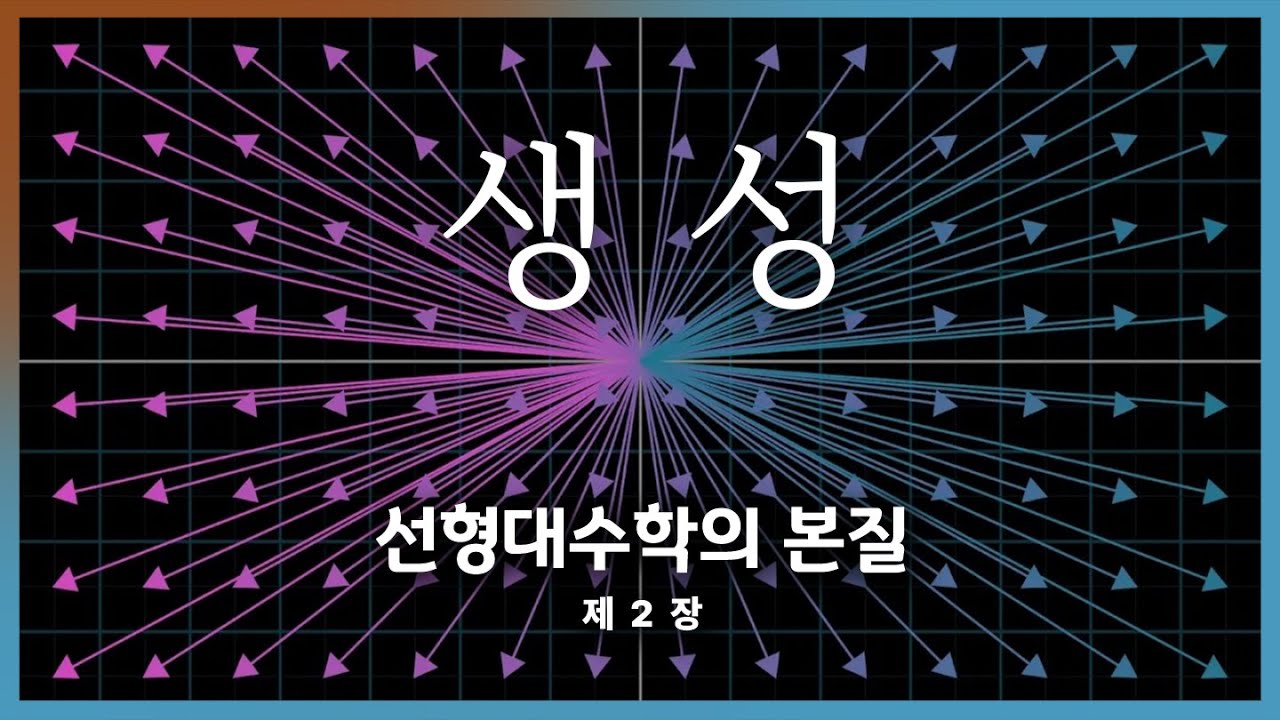
Chapter 2: Linear combinations, span, and basis vectors | Essence of Linear AlgebraBasics

Chapter 2: Linear combinations, span, and basis vectors | Essence of Linear Algebra

Beginner
3Blue1Brown Korean

This lesson teaches three core ideas in linear algebra: linear combinations, span, and basis vectors. A linear combination is when you multiply vectors by numbers (scalars) and add them. The span is the set of all places you can reach using those linear combinations. A basis is a special set of vectors that both spans the space and doesn’t contain any vector that can be made from the others.

#linear combination#span#basis
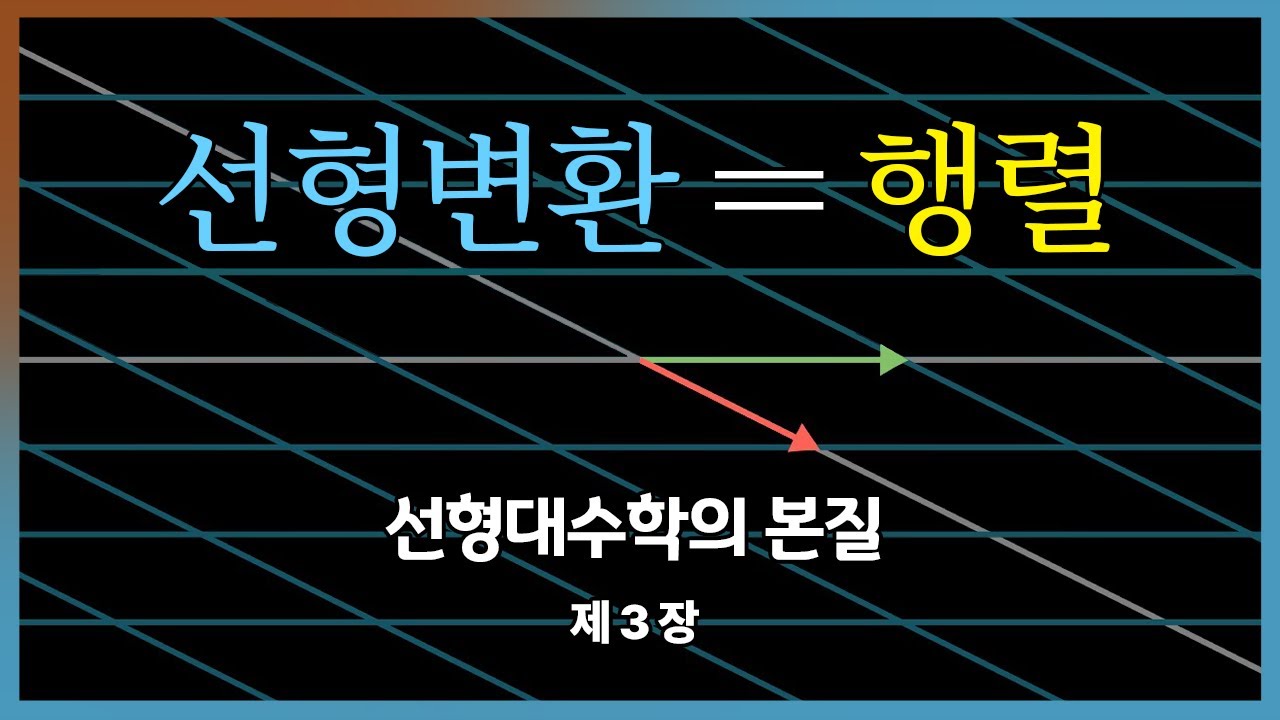
Chapter 3: Linear transformations and matrices | Essence of Linear AlgebraBasics

Chapter 3: Linear transformations and matrices | Essence of Linear Algebra

Beginner
3Blue1Brown Korean

This lesson explains linear transformations: special functions that move every point in space to a new point while keeping straight lines straight and keeping the origin fixed. You learn why not all transformations are linear and how these two rules act like a β€œtruth test.” Examples include scaling (stretching/shrinking) and rotation, which are linear, and translation, which is not because it moves the origin.

#linear transformation#matrix#matrix-vector multiplication
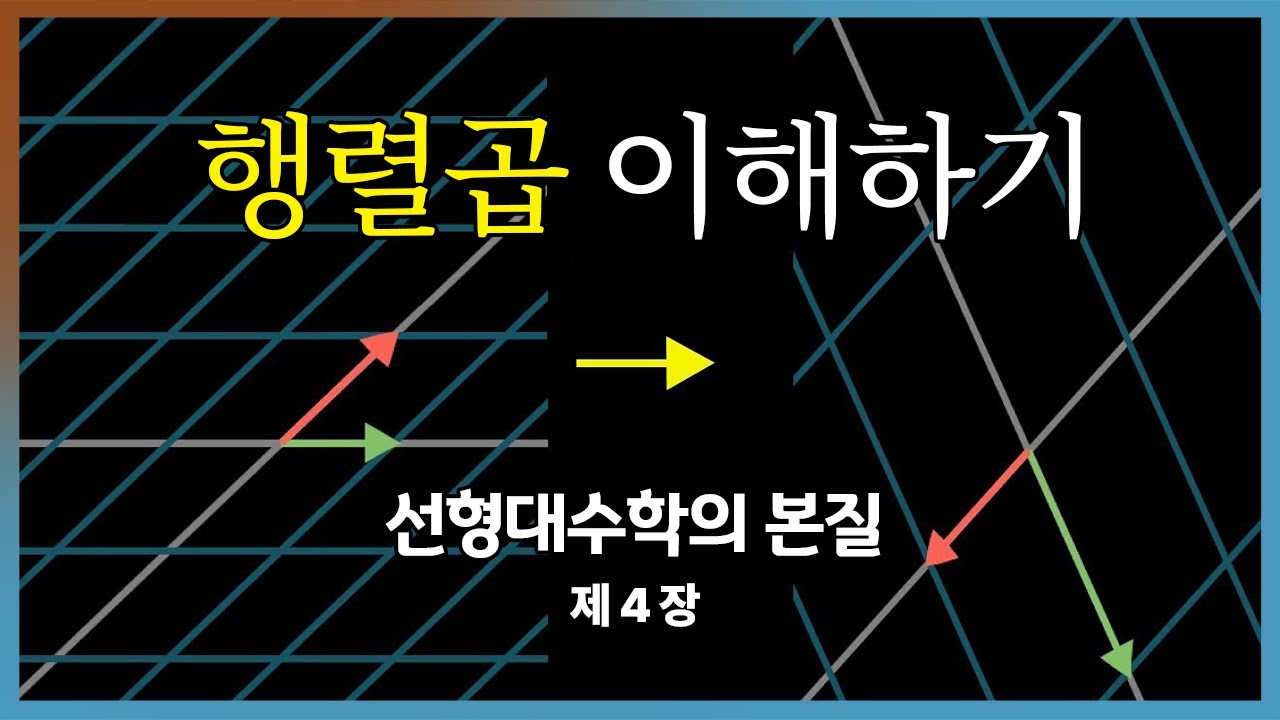
Chapter 4: Matrix multiplication as composition | Essence of Linear AlgebraBasics

Chapter 4: Matrix multiplication as composition | Essence of Linear Algebra

Beginner
3Blue1Brown Korean

This lesson shows a new way to see matrix multiplication: as doing one geometric change to space and then another. Instead of thinking of matrices as number grids, you think of them as machines that move every vector to a new place. When you do two moves in a row, that is called composition, and it is exactly what matrix multiplication represents. The big idea is that one single matrix can capture the effect of doing two transformations in sequence.

#matrix multiplication#composition#linear transformation
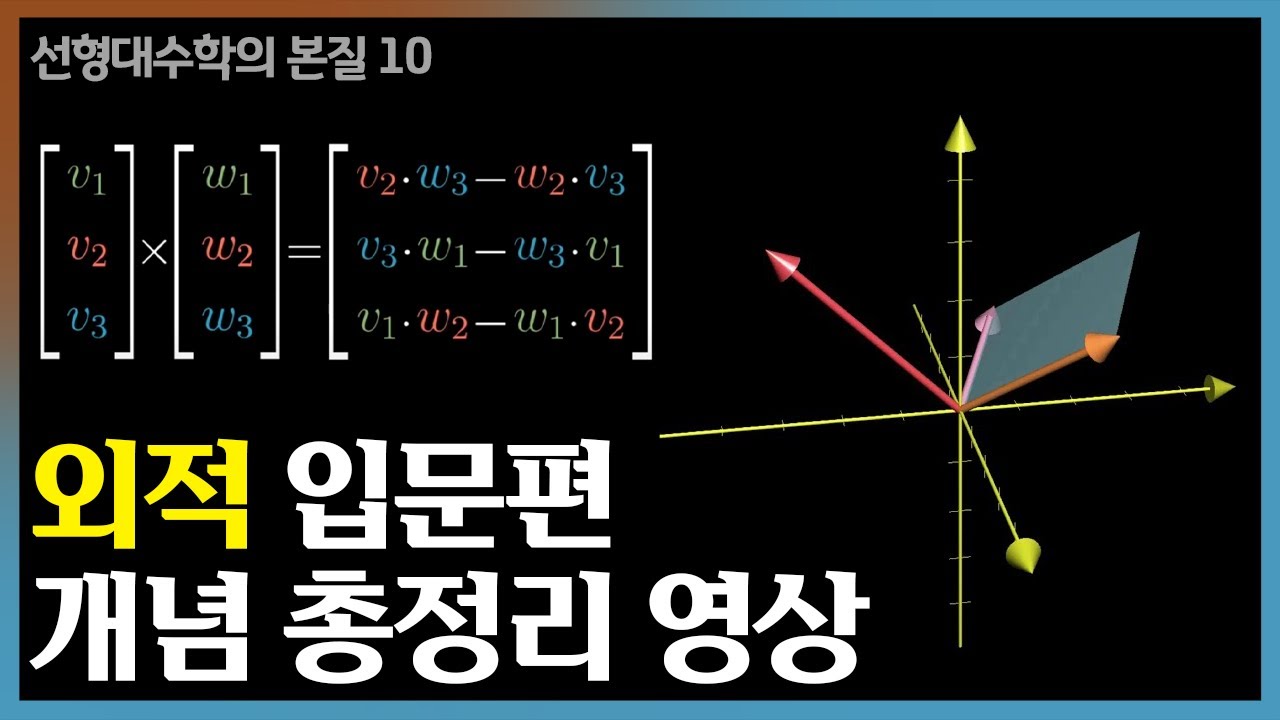
Chapter 10: Cross products | Essence of Linear AlgebraBasics

Chapter 10: Cross products | Essence of Linear Algebra

Beginner
3Blue1Brown Korean

The cross product takes two 3D vectors and produces a third vector that is perpendicular to both. Its direction follows the right-hand rule: curl your fingers from the first vector to the second, and your thumb points in the cross product’s direction. Its length equals the area of the parallelogram formed by the two input vectors. If the two vectors are parallel, the cross product is the zero vector.

#cross product#right-hand rule#parallelogram area