πŸŽ“How I Study AIHISA
πŸ“–Read
πŸ“„PapersπŸ“°Blogs🎬Courses
πŸ’‘Learn
πŸ›€οΈPathsπŸ“šTopicsπŸ’‘Concepts🎴Shorts
🎯Practice
⏱️Coach🧩Problems🧠Thinking🎯Prompts🧠Review
SearchSettings
How I Study AI - Learn AI Papers & Lectures the Easy Way

🎬AI Lectures28

πŸ“šAllπŸ“LLM🎯PromptsπŸ”RAG🀝Agents🧠Deep LearningπŸ’¬NLPπŸ€–MLπŸ“–Basics
Difficulty:
AllBeginnerIntermediateAdvanced
Stanford CS336 Language Modeling from Scratch | Spring 2025 | Lecture 2: Pytorch, Resource AccountingDeep Learning

Stanford CS336 Language Modeling from Scratch | Spring 2025 | Lecture 2: Pytorch, Resource Accounting

Beginner
Stanford Online

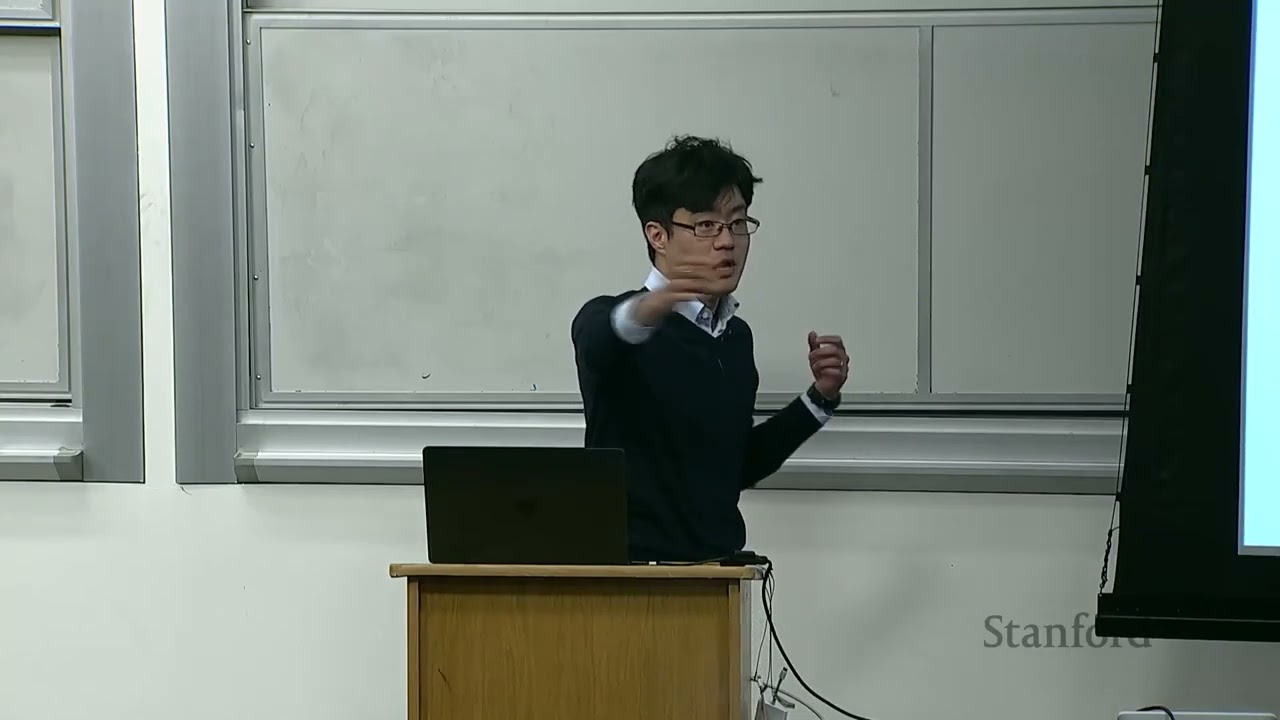
This session teaches two essentials for building language models: PyTorch basics and resource accounting. PyTorch is a library for working with tensors (multi‑dimensional arrays) and can run on CPU or GPU. You learn how to create tensors, perform math (including matrix multiplies), reshape, index/slice, and use automatic differentiation to compute gradients for training.

#pytorch#tensor#autograd
123
Stanford CS336 Language Modeling from Scratch | Spring 2025 | Lecture 3: Architectures, HyperparametersLLM

Stanford CS336 Language Modeling from Scratch | Spring 2025 | Lecture 3: Architectures, Hyperparameters

Beginner
Stanford Online

Language modeling means predicting the next token (a token is a small piece of text like a word or subword) given all tokens before it. If you can estimate this next-token probability well, you can generate text by sampling one token at a time and appending it to the history. This step-by-step sampling turns probabilities into full sentences or paragraphs. Good models make these probabilities sharp for likely words and low for unlikely ones.

#language modeling#next-token prediction#embedding
Stanford CS336 Language Modeling from Scratch | Spring 2025 | Lecture 1: Overview and TokenizationNLP

Stanford CS336 Language Modeling from Scratch | Spring 2025 | Lecture 1: Overview and Tokenization

Beginner
Stanford Online

This session introduces a brand-new course on building language models from scratch. You learn what language modeling is, where it’s used (speech recognition, translation, text generation, classification), and how different modeling families work. The class emphasizes implementing models yourself in Python and PyTorch, plus how to train and evaluate them.

#language modeling#tokenization#n-gram
Stanford CS336 Language Modeling from Scratch | Spring 2025 | Lecture 5: GPUsDeep Learning

Stanford CS336 Language Modeling from Scratch | Spring 2025 | Lecture 5: GPUs

Beginner
Stanford Online

GPUs (Graphics Processing Units) are critical for deep learning because they run thousands of simple math operations at the same time. Language models like Transformers rely on huge numbers of matrix multiplications, which are perfect for parallel processing. CPUs have a few strong cores for complex, step-by-step tasks, while GPUs have many simpler cores for doing lots of math in parallel. Using GPUs correctly can make training and inference dramatically faster.

#gpu#cuda#pytorch